Cornell Big Red vs Yale Bulldogs Picks, Prediction, Odds, and Line Movement for Saturday March 14 2026
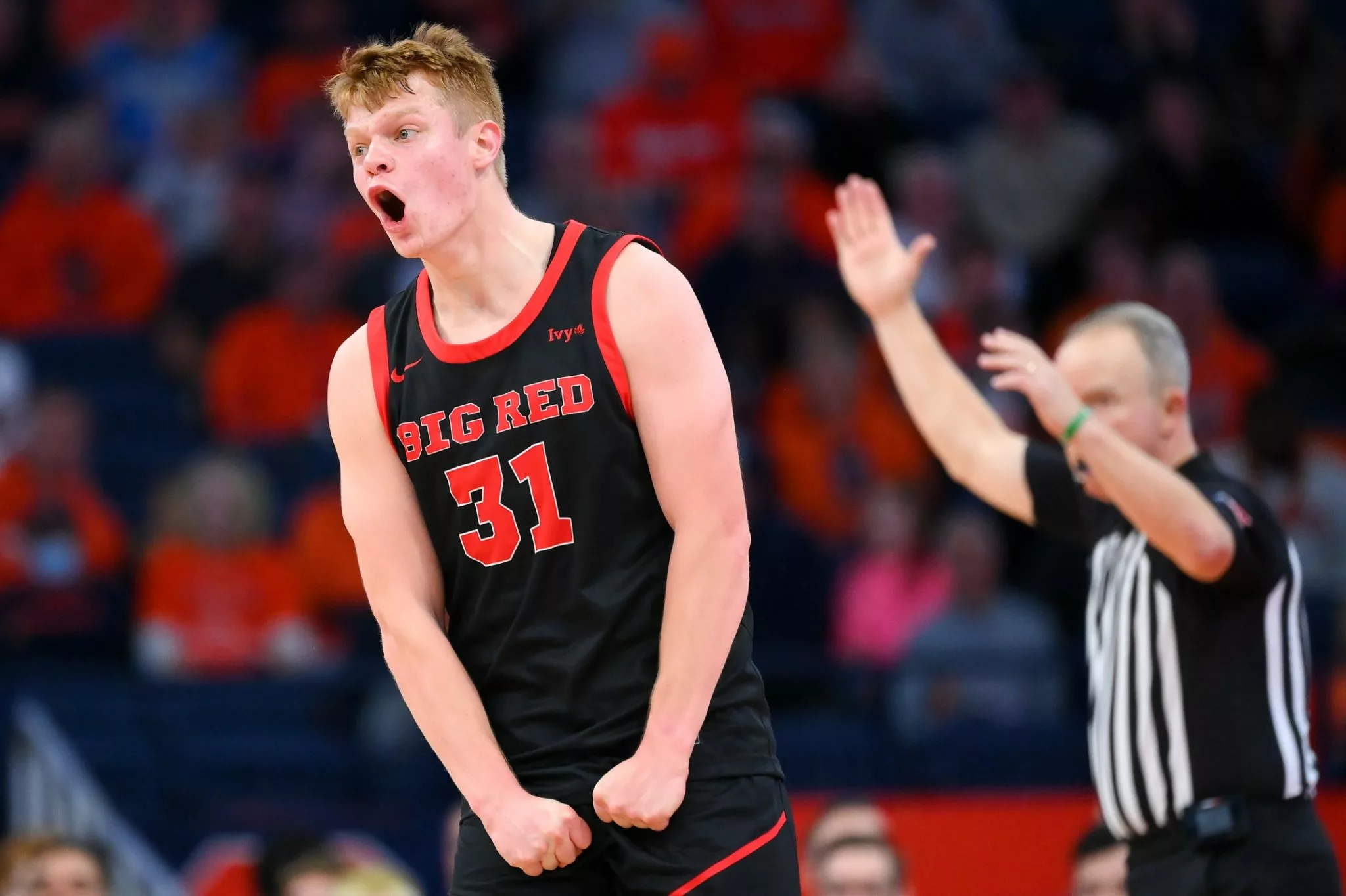
Cornell stunned Yale with a buzzer-beating three-pointer in their final regular-season meeting, and the Big Red are bringing that same explosive offensive identity into Saturday's Ivy League Tournament semifinal on their home floor in Ithaca — but if you have been following our college basketball picks this postseason, you already know that a team allowing 83.2 points per game and hosting a Yale squad that shoots 40.1 percent from three is a setup that can go sideways quickly in a one-possession tournament game. This Yale vs Cornell prediction breaks down why the Bulldogs remain the right lean despite the home-court underdog narrative and why the under is the more compelling total play in a matchup where defense, not pace, should determine the outcome.
Quick Picks and Prediction
- Spread Pick: Yale -3.5
- Total Pick: Under 165.5
- Projected Final Score: Yale 84, Cornell 79
Odds and Line Movement
Opening Odds
| Team | Spread | Total |
|---|---|---|
| Cornell | +3.5 (-105) | Over 165.5 (-110) |
| Yale | -3.5 (-115) | Under 165.5 (-110) |
Current Odds
| Team | Spread | Total |
|---|---|---|
| Cornell | +3.5 (-105) | Over 165.5 (-110) |
| Yale | -3.5 (-115) | Under 165.5 (-110) |
Line Movement - Spread
| Date | Time | Cornell | Yale |
|---|---|---|---|
| 03/13 | 4:36:43 PM | +3.5 (-105) | -3.5 (-115) |
Line Movement - Total
| Date | Time | Over | Under |
|---|---|---|---|
| 03/13 | 4:36:43 PM | 165.5 (-110) | 165.5 (-110) |
Cornell vs Yale Key Matchups and Handicap
Yale
The Bulldogs enter this Ivy League Tournament semifinal with the strongest full-season resume in the conference and a 23-5 overall record that reflects sustained excellence rather than a hot streak. Yale finished first in the Ivy League at 11-3, which is the most important contextual anchor in this handicap regardless of how the final regular-season game between these two teams ended. A program that wins the conference title by this kind of margin has demonstrated the consistency and depth that a single buzzer-beating loss to the same opponent does not undermine.

The February 27 upset loss at Cornell — when Jake Fiegen hit the go-ahead three in the final seconds to give the Big Red a 72-69 win — is the result that makes this spread uncomfortable rather than a comfortable decision. Yale won the first meeting 92-88 in what was a high-scoring, back-and-forth contest, and the second game was a similarly tight affair decided by a single late possession. The series split establishes that Cornell has a legitimate path to winning this game, but it also establishes that Yale is 1-1 in games that were both decided by the final possession, which means the Bulldogs have just as much tournament game-closing experience in this specific rivalry as the Big Red do.
Nick Townsend is the most complete player in this matchup and Yale's most important piece. He leads the Bulldogs in points at 16.5, rebounds at 7.5, and assists at 4.1 per game, which makes him one of the rare players in college basketball who ranks first on his own team in all three major statistical categories simultaneously. Townsend's ability to control the game's tempo, generate scoring from the post and the mid-range, and facilitate for his teammates removes any obvious defensive adjustment Cornell can make without creating another problem somewhere else on the floor.
Get Free $30 Credit for Premium Picks + Exclusive Discounts
Subscribe Now
Yale's supporting cast reinforces why the Bulldogs were the Ivy's best team. Isaac Celiscar adds 12.2 points per game, Trevor Mullin contributes 11.0, and Riley Fox averages 10.8, giving Yale four players in double figures who can hurt Cornell from the perimeter and in the paint. The team's 40.1 percent three-point shooting is one of the best marks in the country and is the primary reason Yale's offensive efficiency holds up even when Cornell's pressure defense creates turnovers and disorganization in transition. Samson Aletan anchors the interior defensively with 1.5 blocks per game and provides the rim protection that limits Cornell's ability to convert paint touches into easy baskets.
Perhaps most critically for the total play, Yale's defense has allowed just 70.2 points per game this season. Against a Cornell team that averages 88.9 points, that defensive efficiency represents a gap of nearly 19 points per game between what the Big Red are used to generating and what Yale typically allows. Even if Cornell's home-court advantage closes some of that gap, asking the Big Red to score at their seasonal average against Yale's defensive structure on a neutral-to-advantageous floor is a significant ask.
Cornell
Cornell arrives at this semifinal riding the momentum of a season-ending win over Yale and with the considerable advantage of playing in Ithaca, where the home crowd and familiar environment have contributed to the Big Red's competitive success throughout the conference season. The 72-69 win on February 27, capped by Fiegen's go-ahead three in the closing seconds, was the kind of result that resonates through a postseason run and gives a program genuine belief that it can beat the favorite when the game is on the line.
Cooper Noard is the engine of Cornell's offense at 18.5 points per game, making him the leading scorer in this game by a meaningful margin over any individual Yale contributor. When Noard is generating shots efficiently and Cornell is pushing pace to create early-offense opportunities before Yale's defense can set up, the Big Red's offense is capable of producing the kind of scoring output that the team-level averages suggest — 88.9 points per game and 21.2 assists per contest, both of which are significantly better than Yale's comparable numbers.
Kaspar Sepp leads Cornell in rebounding at 5.6 per game and will need to contribute in the paint against Townsend and Aletan if the Big Red want to generate the second-chance opportunities that sustain offensive momentum in tight tournament games. Jacob Beccles runs the offense at 3.1 assists per game and leads the team in steals at 1.1, giving Cornell a ball-handler who can disrupt Yale's rhythm defensively while creating transition opportunities on the other end. The 21.2 assists per game is a remarkable team-level number that reflects an offense built around ball movement and shot creation through passing rather than isolation, which means Yale's defense has to guard all five players rather than loading up on Noard.
The central challenge for Cornell is that its defensive numbers tell a completely different story than its offensive ones. The Big Red allow 83.2 points per game, which means they have been giving up nearly as much as they score on a nightly basis. Against a Yale offense shooting 40.1 percent from three with four players averaging at least 10.8 points per game, the Bulldogs have more than enough firepower to exploit Cornell's defensive vulnerabilities. The question is whether Cornell's home court and offensive ceiling can generate enough scoring to offset Yale's defensive advantage, and the total of 165.5 is asking both teams to play at close to their offensive peaks simultaneously.
Betting Trends - YALE vs CU
- Yale won the regular-season series opener 92-88 before Cornell answered with a 72-69 buzzer-beating win on February 27 when Jake Fiegen hit the go-ahead three in the final seconds.
- Yale finished first in the Ivy League at 11-3 and 23-5 overall, the strongest conference record of either program this season.
- Yale allows just 70.2 points per game defensively compared with Cornell's 83.2 allowed per game, a gap of 13 points that represents one of the most significant defensive disparities in this matchup.
- Cornell averages 88.9 points and 21.2 assists per game, while Yale averages 81.5 points and 16.0 assists, reflecting the Big Red's faster pace and higher-volume offensive identity.
- Yale shoots 40.1 percent from three-point range as a team, one of the best marks in college basketball and the primary reason the Bulldogs' offensive efficiency holds up against pressure defenses.
- The spread opened at Yale -3.5 and has not moved, with the total also holding at 165.5 with even juice since the first entry, suggesting a market that has settled on these numbers without generating significant sharp action in either direction.
Key Injuries and Notes - YALE vs CU
Yale Bulldogs: No clearly reported major starter-level absence has been verified for Yale heading into Saturday's semifinal. Townsend, Celiscar, Mullin, Fox, and Aletan are all expected to be available based on the most recent publicly accessible information. Yale enters this game at full operational strength for the roster that has been competing all season, which maximizes the defensive and perimeter shooting advantages that make the Bulldogs the right side in this handicap.
Cornell Big Red: No clearly reported major starter-level absence has been confirmed for Cornell entering Saturday's game either. Noard, Sepp, and Beccles are all expected to be active and available for a home semifinal that represents the biggest game of the Big Red's season. This matchup appears more likely to be decided by tempo control, rebounding execution, and perimeter efficiency than by missing personnel on either side, which places the emphasis squarely on how well each team executes its offensive and defensive identity over 40 minutes.
ATS and Total Picks
- Against the Spread: Yale -3.5 (-115). The Bulldogs own the better full-season record, the superior defensive profile, and one of the best perimeter shooting attacks in the country. The February upset loss in Ithaca is the most legitimate counter-argument, but Yale was 1-1 in two games that both went to the final possession, which means the Bulldogs have demonstrated the ability to win close games against this specific opponent just as recently as Cornell has. Laying 3.5 with a team that shoots 40 percent from three and allows only 70 points per game is a reasonable ask in a neutral-to-home setting for Cornell.
- Total Pick: Under 165.5 (-110). The total of 165.5 asks both teams to operate near their respective offensive ceilings simultaneously in a high-pressure tournament game where Yale's defensive structure should matter more than it does in a regular-season environment. Yale's 70.2 points allowed per game is a full 19 points below Cornell's scoring average, and even accounting for home-court advantages and pace factors, that defensive gap should suppress Cornell's contribution to the combined total. Tournament nerves, half-court execution, and Yale's rim protection all push this game toward the under side of a number that is priced for two teams playing at peak offensive efficiency.
Final Score Prediction
Yale 84, Cornell 79. Townsend controls the first half through a combination of post scoring and perimeter creation, Yale hits enough threes to prevent Cornell from turning this into a pure pace battle, and the Bulldogs' defensive structure limits the Big Red's transition opportunities in the second half. Noard keeps Cornell in it throughout with another big individual performance, but Yale's overall balance and perimeter shooting prove to be too much for a Cornell defense that has allowed 83.2 points per game. The Bulldogs advance to the Ivy League Tournament final in a game where the combined 163 points lands just under the current total.
How to Bet Yale vs Cornell
The Ivy League Tournament semifinal between Yale and Cornell features a spread and total that opened and have held steady without meaningful line movement, which is a relatively rare signal in conference tournament betting and suggests the market has priced this game accurately from the outset. Getting Yale at -3.5 and the under at 165.5 before any late-breaking news or last-minute line adjustment is the priority heading into Saturday's tip-off in Ithaca.
For bettors in states where traditional licensed sportsbooks are not yet available, social sportsbooks have expanded their Ivy League Tournament coverage and allow you to engage with semifinal markets using virtual currency without geographic restrictions. These platforms are a reliable option for staying active on conference tournament action through the weekend.
For real-money wagering on the Yale spread and the under, the bet365 bonus code gives new users one of the strongest welcome offers currently available. Bet365 consistently posts sharp Ivy League lines and offers alternate spreads and totals that can be valuable in a game where the total is priced at a level that requires significant offensive output from both teams to clear.
For a more community-driven tournament betting experience, the fliff promo code is worth exploring before tip-off on Saturday. Fliff has built a loyal following among college basketball bettors during the postseason stretch, and the promotional offer helps new accounts get started heading into one of the Ivy League's most anticipated semifinal matchups. Confirm both teams' final availability updates and any last-minute injury news from either program before placing your wager on this one.