Pennsylvania Quakers vs Harvard Crimson Picks, Prediction, Odds, and Line Movement for Saturday March 14 2026
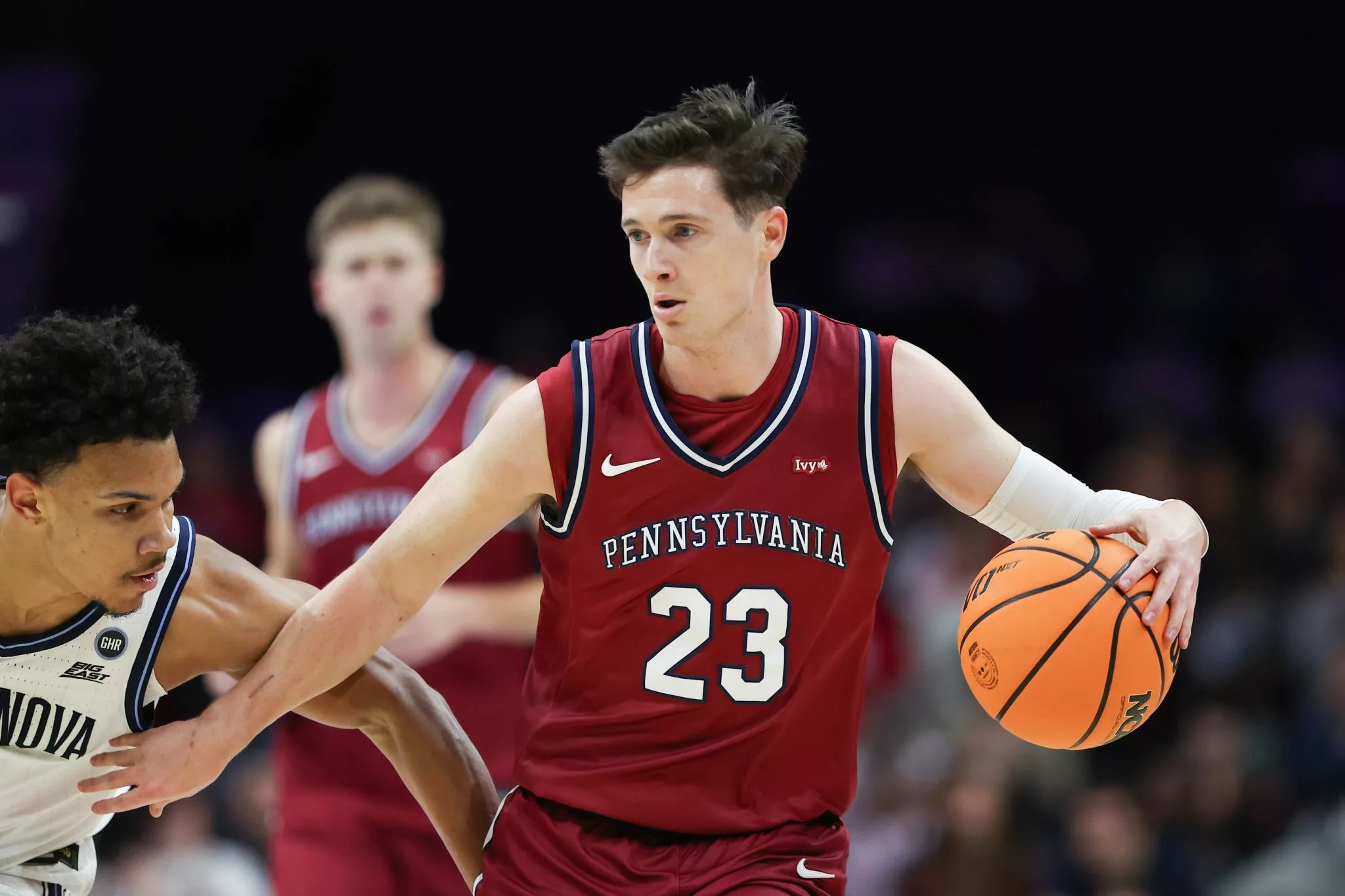
Two possession-game wins separated these programs across two regular-season meetings, and the Ivy League Tournament semifinal between Harvard and Penn promises more of the same controlled, grind-it-out basketball that has defined this rivalry all year. The Crimson enter as a narrow favorite, the total sits in the mid-130s, and the handicap is as genuinely close as any number on the board this weekend. If you are building your Saturday card around conference tournament action, make sure you have already reviewed the sharpest college basketball picks available before you lock anything in.
Quick Picks and Prediction
- Spread Pick: Harvard -2.5
- Total Pick: Under 136.5
- Projected Final Score: Harvard 69, Penn 64
Odds and Line Movement
Harvard opened as a 2.5-point favorite on Friday afternoon and has held at that number through Saturday morning without any meaningful spread movement — a sign that the market is comfortable with the line given the teams' demonstrated parity across two regular-season meetings decided by a combined four points. Public money has leaned toward the Crimson, with Penn attracting 82% of the dollars and 78% of the tickets at the most recent Saturday morning posting — an interesting split where the public is siding with the underdog. The total opened at 135.5 on Friday and crept up to 136.5 overnight, with the over attracting 100% of both the money and the tickets at the recorded Saturday timestamp, suggesting strong public appetite for scoring in a matchup these books are pricing as a defensive, half-court affair.

Line Movement - Spread
| Date | Time | Pennsylvania | Harvard | Public ($, #) |
|---|---|---|---|---|
| 03/13 | 04:36:43 PM | +2.5 -110 | -2.5 -110 | — |
| 03/14 | 06:12:12 AM | +2.5 -105 | -2.5 -115 | PENN 82%, PENN 78% |
Line Movement - Total
| Date | Time | Over | Under | Public ($, #) |
|---|---|---|---|---|
| 03/13 | 04:36:43 PM | 135.5 -110 | 135.5 -110 | — |
| 03/14 | 02:12:13 AM | 136.5 -110 | 136.5 -110 | OV 100%, OV 100% |
Harvard Matchups and Handicap
The Crimson finished the regular season at 17-11 overall and 10-4 in Ivy League play — a record that reflects a team built for precisely this kind of environment. Harvard does not beat opponents with overwhelming athleticism or superior depth; they beat them with ball movement, half-court discipline, and a balanced four-man scoring core that is difficult to scheme against because no single player represents an obvious shutdown target.
Robert Hinton leads the way at 17.1 points per game and is Harvard's primary isolation and shot creation option when the Crimson need a bucket in a late-clock situation. Tey Barbour adds 13.5 points and a team-best 5.3 rebounds per game, giving Harvard a wing who can score and contribute on the glass despite the Crimson's overall rebounding deficit relative to Penn. Chandler Pigge is arguably the most complete player in the rotation — 13.1 points, 5.1 boards, 3.2 assists, and 1.8 steals per game — a two-way contributor who affects the game in ways the box score captures and ways it does not. Thomas Batties III rounds out the core at 12.5 points, 5.2 rebounds, and 1.5 blocks per game, providing interior presence on both ends that Penn will need to account for from the opening tip.
Get Free $30 Credit for Premium Picks + Exclusive Discounts
Subscribe Now
The numbers that matter most for the Harvard handicap are on the offensive side of the ledger. The Crimson average 14.0 assists per game and turn the ball over only 10.9 times — a ratio that reflects exceptional half-court execution and the kind of patient, purposeful offense that wins possession games in tournament settings. When every possession matters and the margin for error is minimal, Harvard's offensive efficiency becomes a genuine structural edge over a Penn team that can be more reliant on individual creation.
Penn Matchups and Handicap
The Quakers come in at 16-11 overall and 9-5 in Ivy play, carrying the credibility of a program that already beat Harvard once this season — a 64-61 win on February 28 that demonstrated Penn's ability to execute with physicality and late-game composure in exactly the kind of grinding, low-possession environment this semifinal will produce.
Ethan Roberts leads Penn at 16.9 points per game and is the Quakers' most reliable interior scoring option — a player who can punish half-court defense with post moves and mid-range finishing in spots where Harvard's length might otherwise dominate. TJ Power at 15.8 points and 7.5 rebounds per game is the more impactful overall player in this specific matchup context: Penn's rebounding advantage over Harvard (36.6 to 31.9 per game) runs largely through Power's production, and if the Quakers can control the glass, they will limit the Crimson's second-chance opportunities and keep the possession count in Penn's favor. Michael Zanoni (11.7 points per game) provides floor spacing as a shooting wing, and the Quakers' 38.2% three-point percentage gives them a perimeter dimension that could open the paint for Roberts and Power if Harvard's defense is forced to respect the arc.
The key variable for Penn is AJ Levine. At 8.3 points, 4.0 assists, and 1.8 steals per game, Levine is the organizational engine for Penn's offense — the player who initiates half-court sets, pushes pace when available, and keeps the Quakers from becoming overly reliant on isolation for Roberts. When Levine is pressured and forced into difficult decisions, Penn's offense can stall and devolve into late-clock hero ball that plays into Harvard's defensive structure. Harvard's backcourt defense, anchored by Pigge's 1.8 steals per game, is built to apply exactly that kind of pressure.
Penn and Harvard Betting Trends
The public data on this game is worth examining carefully before finalizing any position. Penn is drawing 82% of the money and 78% of the tickets as a 2.5-point underdog — a strong public lean toward the plus side that has not moved the line at all, which typically signals that the book is comfortable at 2.5 and does not feel compelled to shade toward Harvard despite the one-sided ticket and dollar distribution. When a number holds firm against heavy public underdog action, it often means the market believes the current price is correct and is simply absorbing recreational money without adjustment.
The total is the more actionable number for sharp bettors. The over has attracted 100% of both the money and the tickets at the recorded overnight timestamp — a complete public shutout — and yet the total has only moved from 135.5 to 136.5. That one-point creep in the face of unanimous over action is relatively modest and suggests the books are not alarmed by the one-sided handle on this particular game. The counter-argument is straightforward: these two teams have played two games this season decided by a combined four points, with scores of 64-63 and 64-61. Neither game came close to 136 combined points. The under has a clear historical edge in this specific matchup, and the public unanimously leaning over in a game where both regular-season meetings went well under the total is a meaningful fade opportunity.
PENN and HAR Key Injuries and Notes
There are no confirmed major absences among the core rotation players for either program heading into Saturday's semifinal. Both teams appear to have their primary contributors available, which keeps the handicap anchored in matchup dynamics rather than roster attrition — exactly the kind of clean analytical environment that makes the regular-season head-to-head results most predictive.
The most significant injury-adjacent concern is foul trouble rather than confirmed absences. Harvard's bench is not especially deep, which means foul trouble for Batties or Pigge — the two most physically demanding contributors in the Crimson rotation — would meaningfully alter Harvard's ability to defend Penn's interior and maintain their rebounding presence. If Batties picks up two fouls before halftime, Penn's Roberts and Power gain significant freedom in the paint during the second half. On Penn's side, the analogous concern is Levine. If Harvard's backcourt pressure forces Levine into difficult situations early and limits his ability to organize Penn's half-court offense, the Quakers' scoring options narrow considerably and Roberts becomes an isolation-heavy focal point that Harvard's defense can more easily key on.
ATS and Total Picks
- Against the Spread: Harvard -2.5 (-105) — The Crimson's offensive efficiency, superior assist-to-turnover ratio, and stronger overall body of work give them a narrow but real structural edge in a possession game. A neutral floor removes Penn's home advantage from the February win, and Harvard's half-court execution is built for exactly this kind of single-elimination grind.
- Total: Under 136.5 (-110) — Both regular-season meetings finished at 64-63 and 64-61 — a combined 252 points across two games, well under the current total. The public is unanimously on the over, which is precisely the kind of fade opportunity the under represents in a matchup with this much established scoring precedent.
Final Score Prediction
Harvard's cleaner offensive operation and steadier half-court defense will be the deciding factors over 40 minutes. Penn will be physical, Power will compete on the glass, and Levine will do enough to keep the Quakers functional offensively through the first half. But the Crimson's assist-heavy, low-turnover attack generates too many quality looks for Penn to contain across a full game, and Harvard's defensive structure will limit the Quakers to the kind of contested, late-clock possessions they cannot consistently convert at a tournament-winning rate.
Harvard 69, Penn 64
How to Bet Harvard vs Penn
Ivy League Tournament semifinals draw a thin but engaged market, and the Harvard vs Penn line has been notably stable since the Friday open — which means the value that exists is in the number as posted rather than in anticipating movement. Here is how to make the most of Saturday's matchup from a betting perspective.
For bettors who want to get involved in Ivy League Tournament action without risking real money, social sportsbooks offer a risk-free environment to play Harvard -2.5 and the under using virtual currency. Games like this one — tight spreads, historically low-scoring matchups, and genuine analytical depth — are exactly the kind of content that sharpens handicapping instincts, and social platforms let you engage fully without financial exposure.
For real-money bettors who have not yet claimed a new-user bonus, the bet365 bonus code delivers one of the more competitive welcome offers in the market. Bet365 consistently posts lines on Ivy League basketball and is a strong option for grabbing the under on a game like this before any final line movement ahead of tip. A one-point total move from 135.5 to 136.5 already happened overnight — further movement is possible depending on Saturday morning handle.
For a mobile-first experience with a strong welcome package, the Fliff promo code gets you into one of the fastest-growing betting apps available. Fliff is well-suited for combining the Harvard spread and the under into a single-game parlay — a natural two-leg ticket in a matchup where both angles point toward the same stylistic read: a defensive, half-court possession game that Harvard wins by a possession or two.
Shop the number before tip. The spread has held at 2.5 throughout, but the juice has shifted — Harvard moved from -110 to -115 at the most recent posting while Penn improved to -105. If you are taking Harvard, getting -110 at an alternate book is worth the extra step before the market settles further in the Crimson's direction.