Athletics vs San Francisco Giants Picks, Prediction, Odds, and Line Movement for Wednesday June 24 2026
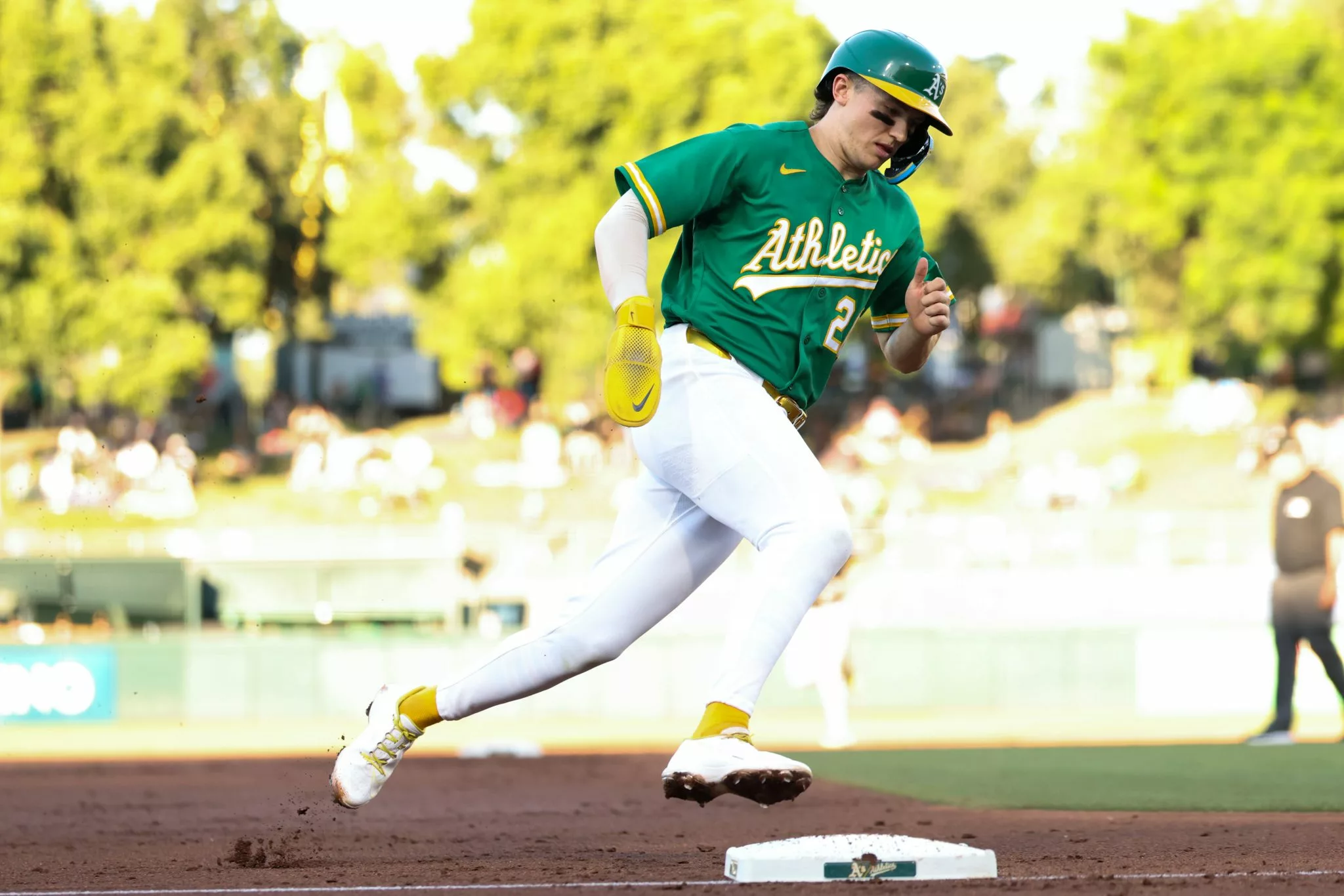
The Athletics and San Francisco Giants prepare to clash at Oracle Park on Wednesday, June 24, 2026, in a highly anticipated Bay Area matchup featuring a stellar young arm and a veteran looking to bounce back. This preview breaks down the latest betting lines, starting pitching matchup, and top MLB player props for Wednesday night's contest.
Best Available Odds
Best Moneyline Odds: Athletics (-117 at DraftKings) / San Francisco Giants (-102)

Best Spread Odds: Athletics -1.5 (+140) / San Francisco Giants +1.5 (-170)
Best Total Odds: Over 8.0 (-118) / Under 8.0 (-105)
Get Free $30 Credit for Premium Picks + Exclusive Discounts
Subscribe Now
Game Info
Date: Wednesday, June 24, 2026
Time: 9:45 PM EDT
Location: Oracle Park, San Francisco, CA
TV: NBC Sports Bay Area, NBC Sports California
Weather: Approximately 60 to 62 degrees with no significant rain risk and wind blowing toward centre field
Athletics vs San Francisco Giants Preview
The Athletics enter Wednesday at 38-41 after suffering a 3-1 loss in the opening game of this three-game series. The defeat extended their losing streak to three games and dropped them below .500 after a difficult finish to their previous series against the Los Angeles Angels.
Tuesday's opener was controlled by Giants starter Robbie Ray. The veteran left-hander allowed only two hits across eight innings and did not surrender an earned run.
The Athletics scored during the third inning after Jung Hoo Lee dropped a fly ball in right field. Colby Thomas reached on the error before Max Muncy drove him home with a single.
That was nearly the extent of the Athletics offense. Tyler Soderstrom collected two of the team's three hits, while the rest of the lineup struggled to generate quality contact against Ray.
The Athletics also lost Zack Gelof during the second inning. Gelof suffered a right-hand laceration and contusion while applying a tag after Matt Chapman attempted to stretch an RBI hit into a double.
X-rays revealed no fracture, and Gelof did not require stitches. He remains day-to-day rather than immediately heading to the injured list.
The injury ended Gelof's 24-game hitting streak. He had become one of the hottest hitters in the Athletics lineup, combining improved contact with 11 home runs and a slugging percentage close to .500.
His potential absence would create another offensive problem for a lineup already playing without Brent Rooker. Rooker remains on the injured list with a bone bruise in his left knee and has not resumed full baseball activities.
The Athletics still possess substantial power throughout the available order. Nick Kurtz, Shea Langeliers, Soderstrom, Jacob Wilson, Lawrence Butler, Henry Bolte, and Carlos Cortes give the visitors several hitters capable of producing extra-base damage.
Kurtz remains the central figure. He enters batting approximately .286 with a .434 on-base percentage, .548 slugging percentage, 19 home runs, and an American League-leading 61 RBIs.
The first baseman has produced one of the strongest offensive profiles in baseball. He combines elite power with enough patience to consistently reach base even during games when opponents avoid challenging him.
Kurtz also owns 155 total bases, placing him among the American League leaders. His combination of hard contact and plate discipline creates the clearest Athletics advantage against Tyler Mahle.
Langeliers gives the lineup another major power threat. He enters batting approximately .268 with 19 home runs, 40 RBIs, and an OPS above .840.
The catcher has developed into a more complete hitter without sacrificing his pull-side power. Mahle must navigate Kurtz and Langeliers consecutively if the Athletics use their expected top-of-the-order alignment.
Soderstrom has also begun producing more consistently after an uneven stretch. He collected two hits Tuesday and remains capable of driving the ball against right-handed pitching.
Jacob Wilson recently returned from the injured list and gives the Athletics an important contact hitter behind their primary power bats. Wilson rarely matches Kurtz or Langeliers for home-run production, but his ability to put the ball in play can extend innings.
Bolte brings speed and athleticism near the bottom of the lineup. He has produced an encouraging batting average since reaching the majors and can turn singles, walks, or defensive mistakes into scoring opportunities.
The Athletics enter batting approximately .248 with a .328 on-base percentage and .417 slugging percentage. They have scored 365 runs and hit 105 home runs.
Those numbers make the Athletics the more powerful offensive team in this matchup. Their lineup has produced 23 more home runs and 45 more runs than San Francisco.
The concern is consistency. The Athletics followed a dramatic 12-11 comeback win over the Angels by losing 7-0 and 9-7 before producing only one unearned run Tuesday.
The pitching staff has created even larger problems over the full season. The Athletics own a team ERA close to 5.00 and have allowed opponents to bat approximately .264.
Jump has been one of the important exceptions. His emergence has given the Athletics a legitimate high-upside starter in a rotation that has otherwise struggled to prevent runs.
The bullpen remains less dependable. The Athletics no longer have Mason Miller anchoring the final innings and have rotated several pitchers through high-leverage roles.
Mason Barnett has emerged as one of the more reliable available relievers. Hogan Harris, Luis Medina, Elvis Alvarado, José Suarez, and several recently recalled arms have also received opportunities.
Tuesday's game required five innings from the bullpen after Aaron Civale threw 84 pitches across four innings. Matt Krook, Barnett, and Suarez covered the remaining outs.
The Athletics avoided using every preferred reliever, but the group has been hit hard over the last two weeks. That prevents Jump's starting advantage from automatically carrying through all nine innings.
The San Francisco Giants enter Wednesday at 32-46 after ending a three-game losing streak. Tuesday's win was their first since completing a doubleheader sweep against Atlanta on June 17.
San Francisco scored twice during the second inning. Lee opened the scoring with a solo home run before Willy Adames doubled and scored on Chapman's hit off the left-field wall.
The Giants added an insurance run during the seventh. Bryce Eldridge walked, Casey Schmitt singled, and Rafael Devers drove Eldridge home with a ground-ball single.
Lee finished with two hits and continues to lead San Francisco's offense. He enters batting approximately .331 with a .365 on-base percentage and .470 slugging percentage.
The right fielder has supplied elite contact while gradually adding more extra-base production. His home run Tuesday was his fifth of the season.
Lee briefly created another injury concern after a collision near second base, but he remained in the game. His availability is central to a lineup missing several regular outfielders.
Schmitt has become San Francisco's leading power hitter. He enters batting close to .300 with 16 home runs, 42 RBIs, and an OPS around .850.
The right-handed hitter collected two singles Tuesday and has produced one of the most surprising offensive breakouts in the National League.
Schmitt receives the platoon advantage against Jump. His ability to punish velocity and elevated pitches makes him the most important San Francisco matchup against the young left-hander.
Chapman provides another right-handed threat. He has not matched his strongest career power seasons but remains capable of producing extra-base damage and drawing walks near the middle of the order.
Adames collected two hits Tuesday and continues to supply right-handed power despite an inconsistent batting average. His double immediately preceded Chapman's RBI hit during the second inning.
Eldridge has added another significant power threat since reaching the majors. The left-handed hitter faces a same-handed matchup against Jump but possesses enough raw power to punish mistakes.
Devers also bats from the left side and has shown signs of improved production. He drove in Tuesday's insurance run and remains capable of turning one elevated pitch into a home run.
The Giants may be without Luis Arraez. He left Tuesday's game after fouling a ball off his right foot and is listed as day-to-day.
X-rays were negative, but Arraez's availability remains important because he is batting above .320 and provides San Francisco with one of baseball's strongest contact profiles.
Heliot Ramos remains on the injured list with a quadriceps strain. He has begun a rehabilitation assignment but is not guaranteed to return Wednesday.
Harrison Bader is also unavailable because of plantar fasciitis. Those injuries reduce San Francisco's outfield depth and place additional pressure on Lee, Schmitt, Jonah Cox, and the available utility players.
San Francisco enters batting approximately .258 with a .310 on-base percentage and .419 slugging percentage. The Giants have scored 320 runs and hit 82 home runs.
The batting average and slugging percentage are respectable, but the low on-base percentage has limited the team's ability to produce sustained rallies.
The Giants frequently depend on individual extra-base hits rather than long sequences of productive plate appearances. That approach becomes more difficult against a pitcher who has not allowed a home run through his first five starts.
San Francisco's bullpen has also struggled during June. The unit entered the current series after allowing repeated late-game damage during losses to Miami and Chicago.
Caleb Kilian handled the ninth inning Tuesday and allowed a hit and walk before closing the game. The Giants avoided using several other relievers because Ray completed eight innings.
That light workload should leave most of the bullpen available behind Mahle. Availability does not automatically guarantee effectiveness, especially if the starter exits before completing five innings.
Starting Pitchers and Pitching Matchup
The Athletics will start left-hander Gage Jump, who enters at 3-1 with a 2.37 ERA, 0.99 WHIP, and 26 strikeouts across 30.1 innings.
Jump has made five major-league starts since being promoted in late May. He has quickly established himself as one of the most promising young pitchers in the American League.
The left-hander has allowed only 21 hits and nine walks. Opponents are batting approximately .200 against him.
Jump has not surrendered a home run. He is the first Athletics pitcher since Rich Harden in 2003 to begin his career with five consecutive homerless starts.
His fastball averages close to 96 mph and can reach 98 or 99. The pitch plays effectively at the top of the strike zone because of his arm angle and ability to create late life.
Jump complements the fastball with multiple breaking pitches and a changeup. The variety allows him to attack both right-handed and left-handed hitters rather than depending on simple platoon matchups.
His major-league debut against Seattle was his most difficult performance. Jump allowed four runs and nine hits during that outing.
He has surrendered only four runs across his subsequent 25.1 innings. The improvement has come through sharper fastball location, more effective secondary pitches, and an aggressive approach inside the strike zone.
Jump delivered his best performance during his latest start against the Angels. He worked seven scoreless innings, allowed one hit, issued one walk, and recorded seven strikeouts.
The seven innings, seven strikeouts, and one hit allowed were all career bests. The performance demonstrated that the Athletics are prepared to let him work deeper when he controls his pitch count.
Jump has recorded 26 strikeouts across 30.1 innings. His strikeout rate is solid but not as dominant as the 2.37 ERA might initially suggest.
He has averaged approximately 4.3 strikeouts per start and 7.7 per nine innings. Jump has been successful by combining enough swing-and-miss production with weak contact and home-run prevention.
San Francisco can challenge him with several right-handed hitters. Schmitt, Chapman, Adames, Daniel Susac, and potentially Arraez provide the most favourable platoon matchups.
Schmitt represents the greatest power threat. Jump must avoid elevated fastballs in the middle of the zone against a hitter who has already produced 16 home runs.
Chapman and Adames can also punish mistakes, but both carry enough swing-and-miss risk for Jump to attack with breaking pitches after reaching two strikes.
Lee creates a different challenge from the left side. The same-handed matchup favours Jump, but Lee's elite contact ability makes him difficult to strike out or retire with one predictable sequence.
Devers and Eldridge also bat left-handed. Jump can use his fastball above the zone and breaking pitches away to limit their pull-side power.
Oracle Park supports Jump's greatest strength. The spacious outfield and marine conditions can turn several dangerous fly balls into routine outs.
The wind toward centre field introduces some risk, but the stadium still suppresses home-run production compared with most major-league parks.
The Athletics should expect Jump to work approximately six innings if his command remains strong. His latest seven-inning outing shows that he is no longer operating under an extreme early-career workload restriction.
The Giants counter with right-hander Tyler Mahle, who enters at 1-7 with a 6.04 ERA, 1.54 WHIP, and 57 strikeouts across 56.2 innings.
Mahle is returning from the injured list after missing nearly one month with a left hamstring strain.
He last pitched for San Francisco on May 26. Mahle allowed three runs on three hits and three walks across five innings against Arizona before experiencing the hamstring issue.
The injury interrupted an already difficult season. Mahle has allowed 63 hits, 24 walks, and 11 home runs across 11 starts.
Opponents have consistently created traffic against him. His 1.54 WHIP means San Francisco has repeatedly been forced to navigate innings with multiple runners aboard.
The home-run rate creates additional danger. Mahle has allowed close to 1.8 homers per nine innings and now faces a lineup with 105 home runs.
His fastball remains the foundation of the arsenal. Mahle uses the pitch close to half the time and normally works above the strike zone to generate swings underneath it.
The pitch has not produced consistent results in 2026. When Mahle misses lower or closer to the centre of the zone, opponents have been able to elevate it for extra-base damage.
Left-handed hitters present the greatest problem. Kurtz, Soderstrom, Butler, McNeil, and Cortes can all receive the platoon advantage.
Kurtz is the most dangerous individual matchup. He has combined a .434 on-base percentage with elite power and enters with 19 home runs.
Mahle cannot simply pitch around Kurtz because Langeliers and Soderstrom should follow him. Providing free baserunners can create an immediate multi-run opportunity.
Langeliers attacks from the right side but owns enough power to punish fastballs from any pitcher. Mahle must keep his splitter and breaking pitches below the strike zone rather than leaving them elevated.
Soderstrom enters after collecting two hits Tuesday and should receive another favourable matchup from the left side. His recent contact gives the Athletics a third dangerous hitter near the centre of the lineup.
The veteran's rehabilitation appearance raises another concern. Mahle threw 63 pitches across three innings for Triple-A Sacramento.
He allowed only one hit and one earned run while recording three strikeouts. The five walks were the more important result.
Only 33 of his 63 pitches were strikes. That lack of efficiency makes it difficult to assume Mahle is ready for a normal six- or seven-inning workload.
San Francisco may limit him to approximately 70 or 80 pitches, particularly if the Athletics extend several early at-bats.
An abbreviated start would place substantial pressure on the Giants bullpen. Even four acceptable innings from Mahle could leave San Francisco needing 15 outs from its relievers.
Mahle has shown a higher ceiling than his season line suggests. He delivered seven scoreless innings against the Dodgers in April and has recorded nearly one strikeout per inning.
The challenge is sustaining command after the injury. One minor-league outing with five walks does not provide enough evidence that his location problems have been resolved.
Game Thesis: The Athletics own the clear starting-pitcher advantage. Jump has limited opponents to a 2.37 ERA and has not allowed a home run, while Mahle returns from the injured list with a 6.04 ERA, 1.54 WHIP, and serious command questions following a five-walk rehabilitation appearance. San Francisco's right-handed hitters give the Giants a path to scoring against Jump, and the Athletics bullpen remains a concern after the starter exits. The Athletics should still generate more early offense against Mahle and San Francisco's middle relief. That makes the visitors the preferred moneyline side, with the run line offering an aggressive alternative. Oracle Park and Jump's run prevention support the Under, although the unreliable bullpens prevent the total from becoming the strongest wager.
⭐ Best Bet - Moneyline Pick: Athletics (-117)
The Athletics are the strongest game selection at a price close to even money. The starting-pitcher gap is too significant to ignore.
Jump owns a 2.37 ERA and 0.99 WHIP through five starts. He has allowed only four runs across his last 25.1 innings and enters after seven scoreless innings against the Angels.
Mahle carries a 6.04 ERA and 1.54 WHIP. He has allowed 11 home runs and now returns from a month-long absence after issuing five walks during his only rehabilitation start.
The Athletics are positioned to force Mahle into the strike zone. Kurtz, Langeliers, Soderstrom, Wilson, and Cortes give the lineup enough patience and power to punish command mistakes.
Kurtz creates the clearest matchup advantage. Left-handed hitters have generated elevated expected power against Mahle, while Kurtz enters as one of baseball's leading run producers.
San Francisco remains dangerous because of the Athletics bullpen. Jump may leave with a lead only for the Giants to receive several innings against an inconsistent relief group.
The Giants also possess enough right-handed power through Schmitt, Chapman, and Adames to prevent Jump from becoming automatic.
The visitors still have more favourable paths to scoring. Mahle may struggle to complete five innings, and San Francisco's bullpen has produced an ERA above six during June.
The possible absence of Gelof reduces the Athletics lineup, but the visitors remain deeper in home-run power. Rooker is already unavailable, yet the Athletics have still hit 105 home runs.
Arraez's uncertain status also affects San Francisco. Losing his elite contact would make the top of the Giants lineup easier for Jump to navigate.
The -117 price reflects a relatively close game rather than a comfortable Athletics advantage. A projected final around 5-3 or 4-3 gives the visitors enough edge to justify the moneyline.
Spread Pick: Athletics -1.5 (+140)
Athletics -1.5 provides a worthwhile plus-money alternative for bettors expecting the starting-pitcher mismatch to create early separation.
Mahle has allowed multiple baserunners in most of his starts. His 1.54 WHIP and elevated home-run rate give the Athletics several ways to produce a multi-run inning.
A walk ahead of Kurtz, Langeliers, or Soderstrom can quickly become extra-base damage. Mahle's rehabilitation command makes that sequence especially realistic.
San Francisco may also remove him before the third trip through the lineup. That would expose middle relievers rather than allowing the Giants to move directly from the starter to their preferred late-game options.
The Athletics possess enough power to add insurance runs. Kurtz and Langeliers have 19 home runs each, while Soderstrom has 13.
Jump has allowed two earned runs or fewer in four consecutive starts. Another controlled outing could give the Athletics a two- or three-run lead before the game reaches the bullpen.
The risk is Oakland's relief structure. The Athletics have blown several leads and remain without a dependable established closer.
San Francisco also showed Tuesday that it can create late scoring through Lee, Schmitt, Devers, Chapman, and Adames.
Gelof's hand injury removes another potential source of offense if he is unavailable. The Athletics may need additional production from McNeil, Muncy, Butler, or the lower order.
The +140 return compensates for those concerns. Scores such as 5-3, 6-3, or 5-2 support the Athletics run line.
Total Pick: Under 8.0 (-105)
Under 8.0 remains the preferred total, but it carries more risk than the original draft acknowledged.
Jump provides the strongest argument. He has allowed eight total runs across 30.1 innings and only four across his last four starts.
He has also prevented home runs. San Francisco must string together several productive plate appearances rather than depending on one swing to produce multiple runs.
Oracle Park supports that approach. The stadium's large outfield and cool evening conditions normally reduce home-run production.
San Francisco's lineup contains several dangerous right-handed hitters, but the team has scored only 320 runs over 78 games. Its .310 on-base percentage limits the number of extended rallies.
The Athletics should score against Mahle, but their lineup is not at full strength. Rooker remains on the injured list, while Gelof may be unavailable after Tuesday's hand injury.
The visitors were also limited to three hits during the series opener. One poor offensive game does not define the matchup, but it shows that the Athletics can become overly dependent on home runs.
Mahle has struggled badly during the season, yet he has still shown the ability to miss bats. His 57 strikeouts across 56.2 innings provide a path to limiting damage if his command improves.
The total becomes more dangerous once the bullpens enter. The Athletics relief staff has struggled throughout June, while the Giants bullpen has also allowed repeated late runs.
Mahle's probable workload restriction increases that concern. San Francisco may require four or five innings from its bullpen even if the starter avoids an early collapse.
The wind toward centre field also reduces some of Oracle Park's normal pitching advantage.
The eight-run number provides push protection. A 5-3 or 4-4 result would return the stake, while projected finals such as 5-2, 4-2, or 4-3 would cash the Under.
The Under is supported by Jump and the venue, but the Athletics moneyline remains the stronger overall wager because it does not require both bullpens to perform well.
Top Player Prop Picks
Nick Kurtz Over 1.5 Hits + Runs + RBIs (-123) Kurtz enters with one of the strongest offensive profiles in the American League.
He is batting approximately .286 with a .434 on-base percentage, .548 slugging percentage, 19 home runs, and 61 RBIs.
The combination market gives Kurtz several ways to clear the number. He can record two hits, combine one hit with a run, or drive in a teammate after the Athletics create traffic.
Mahle has allowed a 1.54 WHIP, placing frequent runners aboard before reaching the middle of opposing lineups.
Left-handed hitters have also produced substantial expected power against him. Kurtz enters with elite recent numbers against right-handed pitching and has consistently driven fastballs.
Mahle relies heavily on his fastball. That creates a favourable arsenal matchup for a hitter capable of punishing velocity inside the strike zone.
The starter's recent command adds another path. Mahle walked five hitters during his three-inning rehabilitation appearance.
A walk does not count directly toward the combination, but it can place Kurtz on base ahead of Langeliers and Soderstrom. Those hitters give him a realistic chance to score.
Kurtz should bat near the top of the order and receive four or five plate appearances. Mahle's expected abbreviated workload also gives him opportunities against the San Francisco bullpen.
The -123 price is preferable to laying a larger number on a basic one-hit prop. Kurtz's power, on-base ability, and central lineup role support Over 1.5 hits, runs, and RBIs.
Shea Langeliers Over 1.5 Hits + Runs + RBIs (-134) Langeliers enters batting approximately .268 with 19 home runs, 40 RBIs, and an OPS around .850.
He should bat directly behind Kurtz, creating both RBI opportunities and a strong chance to score if Soderstrom or Wilson produces behind him.
Mahle has allowed 11 home runs across 56.2 innings. Langeliers possesses the pull-side power to take advantage of elevated fastballs or breaking pitches that remain inside the strike zone.
The combination prop does not require a home run. One hit and one run, one hit and one RBI, or two hits would be sufficient.
Kurtz's on-base percentage creates an especially useful setup. If Mahle avoids challenging the Athletics first baseman, Langeliers may bat with a runner already aboard.
San Francisco's bullpen strengthens the later opportunities. The Giants have struggled during June and may need several innings after Mahle's limited rehabilitation build-up.
Langeliers has also remained productive even as the Athletics lineup has dealt with injuries. His 152 total bases place him among the American League leaders.
The largest concern is Oracle Park. Several fly balls that would become home runs in smaller stadiums can remain inside the field in San Francisco.
Langeliers does not need to clear the fence to produce the required combination. His lineup position and multiple statistical paths make Over 1.5 hits, runs, and RBIs preferable to an expensive one-hit market.
Gage Jump Under 4.5 Strikeouts (+109) Jump's run prevention has been excellent, but his strikeout production has remained more modest.
He has recorded 26 strikeouts across 30.1 innings, equivalent to approximately 7.7 per nine innings.
Jump has averaged 4.3 strikeouts across his five starts. The current line requires him to reach five.
He recorded seven strikeouts during his latest start against the Angels, demonstrating a ceiling above the current number.
The previous four outings produced 19 combined strikeouts. Jump has been effective by limiting hard contact and home runs rather than depending exclusively on swing-and-miss production.
San Francisco's lineup also contains several contact-oriented hitters. Lee, Arraez if available, Schmitt, and Devers can place balls in play without carrying extreme strikeout rates.
Lee is especially difficult to strike out. His contact ability can reduce Jump's opportunity to accumulate quick two-strike outs near the top of the lineup.
Oracle Park encourages pitchers to accept balls in play. Jump does not need to chase strikeouts when the large outfield can convert fly balls into outs.
The Athletics may also remove him around six innings after allowing him to work seven during his latest appearance. Five or six innings provide less room for error than a normal seven-inning workload.
The Giants still offer strikeout opportunities through Chapman, Adames, Eldridge, and the lower order. Jump's velocity and breaking pitches could produce another elevated total.
The plus-money price compensates for that ceiling. Four or fewer strikeouts can accompany another strong run-prevention performance, making the Under compatible with the Athletics moneyline position.