Seattle Storm vs Phoenix Mercury Picks, Prediction, Odds, and Line Movement for Thursday July 2 2026
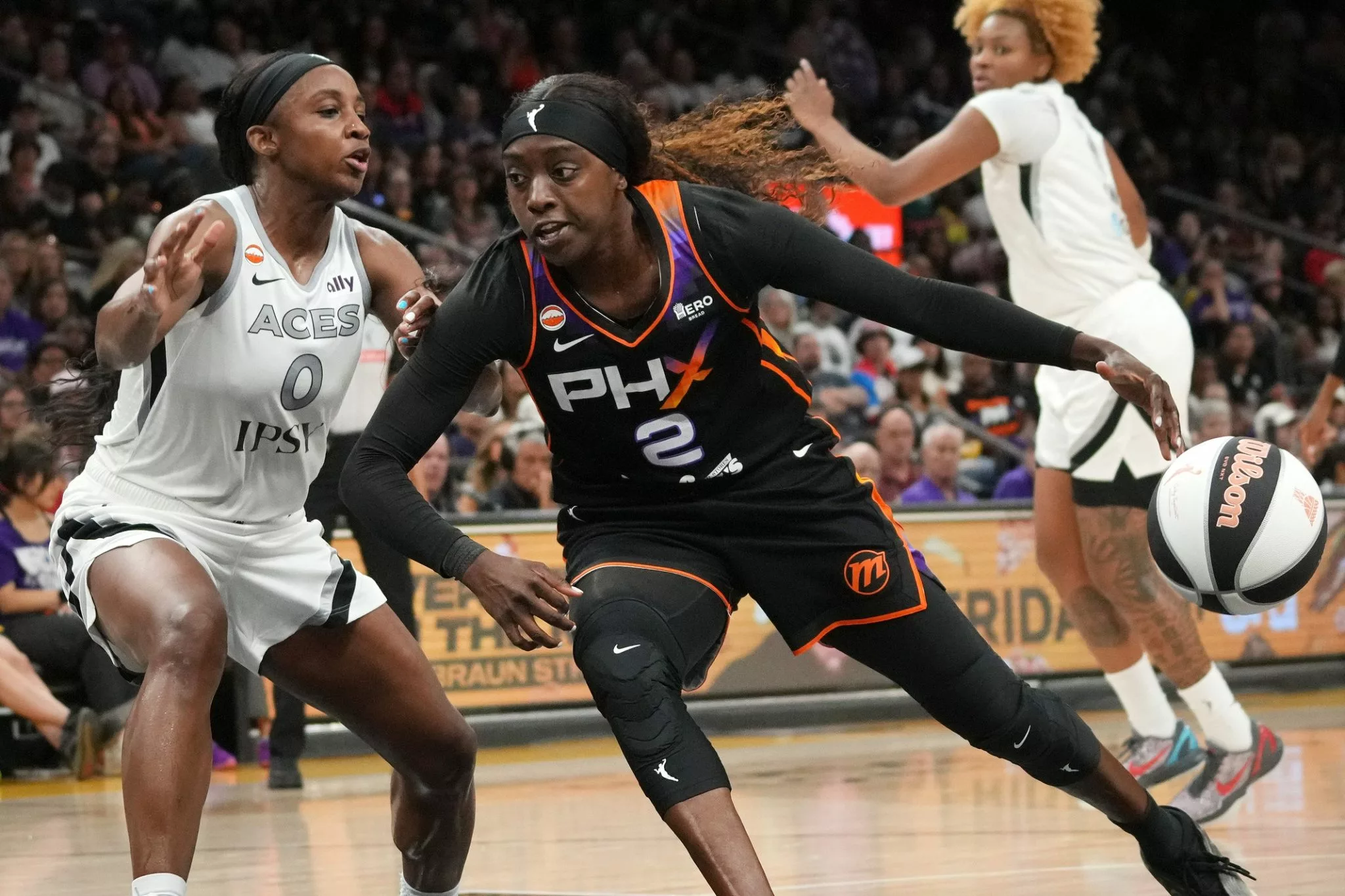
The Seattle Storm and Phoenix Mercury return from the Commissioner’s Cup break with matching two-game winning streaks when they meet at Mortgage Matchup Center on Thursday night.
Phoenix has already defeated Seattle twice this season, but the Storm enter after producing their two strongest offensive performances of the year. The Mercury also face new frontcourt concerns with Natasha Mack and Noémie Brochant unavailable. This preview examines the current odds, injuries, recent form, matchup, predictions, and top WNBA player props for Thursday’s Storm vs Mercury game.

Best Available Odds for Storm vs Mercury
The best available moneyline lists the Seattle Storm at +143 through William Hill, while the Phoenix Mercury are available at -165 through bet365. Bettors targeting the point spread can take Seattle +3.5 at -105 through William Hill or Phoenix -3.5 at -110 through Betway. The best Over price is Over 166.5 at -118 through BetVictor, while the Under is available at 167.5 for -110 through Betway.
Game Info
The Storm and Mercury will play Thursday, July 2, 2026, at 10:00 PM EDT. The game will take place at Mortgage Matchup Center in Phoenix, Arizona. The matchup will be available through WNBA League Pass on Prime Video, while Mercury games are also carried locally through Arizona’s Family.
Get Free $30 Credit for Premium Picks + Exclusive Discounts
Subscribe Now
Seattle Storm vs Phoenix Mercury Preview
Seattle enters Thursday at 5-15 after finally escaping an 11-game losing streak. The Storm defeated the New York Liberty 99-88 on June 25 before delivering an even more impressive 105-90 victory over the Atlanta Dream on Saturday. Those wins came against two teams with winning records and provided the clearest evidence that Seattle’s young rotation is beginning to develop.
The Atlanta performance was extraordinary from an efficiency perspective. Seattle shot 60.3% from the field and made 14 of 23 three-point attempts, producing points from every part of the starting lineup. That level of shooting is unlikely to continue, but the balanced production matters more than the exact percentage.
Flau’jae Johnson recorded 24 points and 11 rebounds while making nine of her 12 attempts. Johnson has averaged 12.9 points, 5.5 rebounds, and 2.7 assists this season, but her role has expanded as Seattle has placed greater responsibility on its younger players.
Johnson’s ability to create offense without relying exclusively on designed plays makes her especially important against Phoenix. Alyssa Thomas and DeWanna Bonner give the Mercury experienced and versatile defenders, but Johnson can attack before the half-court defense becomes established.
Awa Fam supplied 21 points against Atlanta while making eight of nine shots and five of six attempts from beyond the arc. Fam is averaging 11.9 points and 5.1 rebounds while shooting above 53% from the field and 45% from three-point range.
Fam’s outside shooting creates a difficult matchup for a Phoenix frontcourt missing Mack. The Mercury may be forced to use smaller lineups or give additional minutes to Kyara Linskens, allowing Seattle to pull Phoenix’s remaining interior defenders away from the basket.
Dominique Malonga has become Seattle’s most productive season-long scorer. She is averaging 17.4 points and 7.6 rebounds while shooting 50.9% from the field. Malonga added 16 points and 11 rebounds against Atlanta and continues to demonstrate the size and skill that made her one of the league’s most important young players.
The possible return of Ezi Magbegor gives Seattle another important frontcourt option. Magbegor has been listed as probable after missing the opening portion of the season with a foot injury. Her defensive ability and rebounding would immediately improve the Storm, although her workload could be restricted during a potential season debut.
Natisha Hiedeman remains Seattle’s most dependable backcourt scorer and facilitator. She is averaging 15.6 points and 4.7 assists while shooting 44.9% from the field and 38.3% from three-point range. Hiedeman recorded 20 points and six assists against Atlanta, giving Seattle another veteran capable of stabilizing the young lineup.
Jade Melbourne added 10 points and five assists in the victory, while Seattle also received useful bench minutes from Zia Cooke, Jordan Horston, and Stefanie Dolson. The Storm are averaging 81.1 points and 19 assists, but their overall offensive efficiency remains affected by the prolonged losing streak that preceded the current run.
Seattle’s road and conference records remain significant concerns. The Storm have lost their first 10 games against Western Conference opponents and carry an eight-game road losing streak into Phoenix. Two strong home wins do not automatically resolve the problems that have followed Seattle throughout the season.
Phoenix enters at 7-13 after earning consecutive road victories over Indiana and Toronto. The Mercury defeated the Fever 111-109 before beating the Tempo 89-80 on Saturday, giving Phoenix three wins in its last four games and renewed momentum in the playoff race.
Kahleah Copper scored 27 points on 10-for-15 shooting against Toronto. She is averaging 20.1 points and remains Phoenix’s primary perimeter scorer, although her season-long three-point percentage has remained below her established standard.
Copper presents the largest individual scoring problem for Seattle. The Storm can use Johnson, Horston, and Melbourne at different points, but none can afford to lose Copper during transition or allow her to build momentum through early drives.
Thomas returns after serving a one-game league suspension during the victory over Toronto. She is averaging 14.7 points, 6.6 rebounds, and 8.4 assists while shooting 52.1% from the field. Her playmaking gives Phoenix a structural advantage because she can initiate offense from the perimeter, post, or transition.
Thomas recorded only 14.5 combined points and rebounds across the two earlier Seattle matchups cited in the original draft, but reducing her contribution to scoring and rebounding misses the largest part of her value. She creates shots for Copper, Bonner, Monique Akoa Makani, and Phoenix’s frontcourt while also directing the defense.
Bonner produced 13 points and 11 rebounds against Toronto. The veteran is averaging nine points and 4.9 rebounds while providing Phoenix with size along the perimeter. Her rebounding becomes more important with Mack unavailable.
Valeriane Ayayi also delivered 20 points and six rebounds off the bench in Toronto. Ayayi’s return has improved Phoenix’s wing depth and gives the Mercury another scorer capable of punishing Seattle when Thomas creates an advantage through penetration.
The Mercury will be without Mack, who is expected to miss between two and four weeks because of a bone bruise in her left foot. Mack had averaged 9.2 points, 8.3 rebounds, and 1.3 blocks while shooting above 60% from the floor. Her absence removes Phoenix’s leading rebounder and most efficient interior finisher.
Brochant is also out with an ankle injury, while Sami Whitcomb remains unavailable because of a knee injury. Brochant had supplied 6.3 points and 2.1 assists per game while shooting above 41% from three-point range.
Those absences reduce Phoenix’s depth and create a clearer path for Malonga, Fam, and a potentially returning Magbegor to influence the game. Thomas and Bonner will likely be required to handle more rebounding responsibility, while Linskens may receive additional interior minutes.
Phoenix has already won both meetings this season. The Mercury earned a 72-68 road victory on June 3 before defeating Seattle 93-73 in Phoenix on June 20. The second game extended what was then Seattle’s losing streak to 10 contests.
The first meeting was defined by half-court defense and poor Seattle shooting. The second became more open, with Phoenix using a 13-0 second-quarter run to establish control before winning by 20 points. Hiedeman led Seattle with 20 points, while Phoenix received five double-digit scorers.
Storm vs Mercury Matchup Analysis
Phoenix owns the more dependable half-court offense because Thomas can create a quality possession without requiring a traditional point guard. Seattle’s offense has improved, but the Storm still depend heavily on young players maintaining efficiency under road pressure.
The Mercury can attack Seattle through repeated Thomas and Copper actions. Thomas can screen for Copper, receive the ball in the short roll, and force Seattle to choose between protecting the rim and leaving Phoenix’s shooters open.
Seattle’s strongest response comes through its frontcourt size. Phoenix no longer has Mack available to match Malonga’s rebounding and interior scoring, while Brochant’s absence further reduces the rotation. The Storm can remain competitive by winning the glass and creating second-chance opportunities.
The potential return of Magbegor gives Seattle another defensive solution against Thomas. Magbegor can switch, protect the rim, and recover to shooters, but expecting a full workload after a prolonged absence would be aggressive.
Phoenix must also account for Seattle’s improved shooting. Hiedeman, Fam, Johnson, Malonga, Melbourne, and Dolson all provide some level of perimeter spacing, making it more difficult to concentrate every defender near the basket.
The Storm’s 60.9% three-point shooting against Atlanta is not a sustainable expectation. Seattle remains a 35% three-point team over the full season, and Phoenix has already forced the Storm into inefficient half-court possessions twice.
The total has fallen from the 169.5 listed in the original draft to a market that offers Under 167.5. That adjustment respects Phoenix’s control of the first two meetings while acknowledging the recent offensive improvement from both teams.
Game Thesis: Seattle is playing its best basketball of the season, but Phoenix owns the more trustworthy playmaking structure and has already won both meetings. Thomas’ return restores the Mercury’s primary organizer, while Copper enters in strong scoring form. Phoenix’s frontcourt injuries should keep Seattle competitive longer than it did on June 20, but the Storm’s conference and road records make a complete upset difficult to support. A projected 86-79 Mercury victory supports Phoenix -3.5, the Phoenix moneyline, and Under 167.5.
Best Bet - Spread Pick: Phoenix Mercury -3.5 (-110)
Phoenix -3.5 is the strongest game wager because it asks the Mercury to win by only two possessions at home. Phoenix won the first two meetings by four and 20 points and enters with consecutive road victories.
Thomas’ return improves the Mercury’s ball movement, rebounding, and defensive versatility. Phoenix defeated Toronto without her, but her ability to create shots for Copper and the remaining rotation gives the Mercury more ways to respond if Seattle begins well.
Copper has also returned to her established scoring level. She recorded 27 points against Toronto and is averaging more than 20 points for the season.
Seattle deserves greater respect than it received earlier in June. The Storm scored 204 combined points against New York and Atlanta, while Johnson, Fam, Malonga, and Hiedeman all produced major contributions.
The concern is whether that production transfers to the road. Seattle remains winless against Western Conference opponents and has lost eight consecutive road games.
Phoenix’s injuries make laying a larger number uncomfortable. The current -3.5 line provides a better position than the -4.5 listed in the original draft and leaves room for Seattle to remain competitive into the fourth quarter.
Total Pick: Under 167.5 (-110)
Under 167.5 is the preferred total despite the recent scoring surge from both teams. Seattle’s previous two games were driven by unusually efficient shooting, including a 60.3% performance against Atlanta.
Phoenix has already held Seattle to 68 and 73 points this season. The Mercury’s frontcourt injuries weaken that defensive projection, but Thomas and Bonner remain capable of switching and preventing the Storm from receiving easy transition opportunities.
Seattle can also reduce Phoenix’s efficiency with Malonga and a potentially returning Magbegor around the basket. The Storm should prioritize preventing Thomas from creating direct drives and passes to cutters rather than chasing steals.
The primary Over risk comes from three-point shooting. Phoenix scored 111 against Indiana, while Seattle made 14 threes against Atlanta. Another high-volume perimeter performance could quickly push the game toward the 170s.
The projected 86-79 result finishes at 165 points. Under 167.5 provides enough room for both teams to score into the 80s without requiring a return to the slowest version of the earlier matchups.
Top Player Prop Picks for Storm vs Mercury
Kahleah Copper Over 18.5 Points (-120, bet365): Copper is averaging 20.1 points and enters after scoring 27 on 10-for-15 shooting against Toronto. Phoenix will be without Mack and Brochant, concentrating more of the scoring responsibility around Copper, Thomas, and Bonner. Seattle has allowed more than 86 points per game, giving Copper enough opportunities to reach 19 through transition attacks, perimeter shots, and free throws.
Flau’jae Johnson Over 12.5 Points (-110, bet365): Johnson scored 24 against Atlanta and has taken on a larger role during Seattle’s two-game winning streak. She is averaging 12.9 points for the season and should continue receiving significant minutes against Phoenix’s reduced wing and frontcourt depth. The line requires only a modest improvement over her season average and does not depend on another unusually efficient 24-point performance.
Alyssa Thomas Over 6.5 Rebounds (-106, William Hill): Thomas is averaging 6.6 rebounds and should handle additional work on the glass with Mack unavailable. Seattle starts multiple active rebounders in Malonga, Johnson, and Fam, which should keep Thomas involved around the basket throughout the game. Her expected workload also remains secure after missing the Toronto contest because of a one-game suspension rather than an injury.
Prediction: Phoenix Mercury 86, Seattle Storm 79