GOP Senate Control at 56% on Polymarket as Alaska Votes
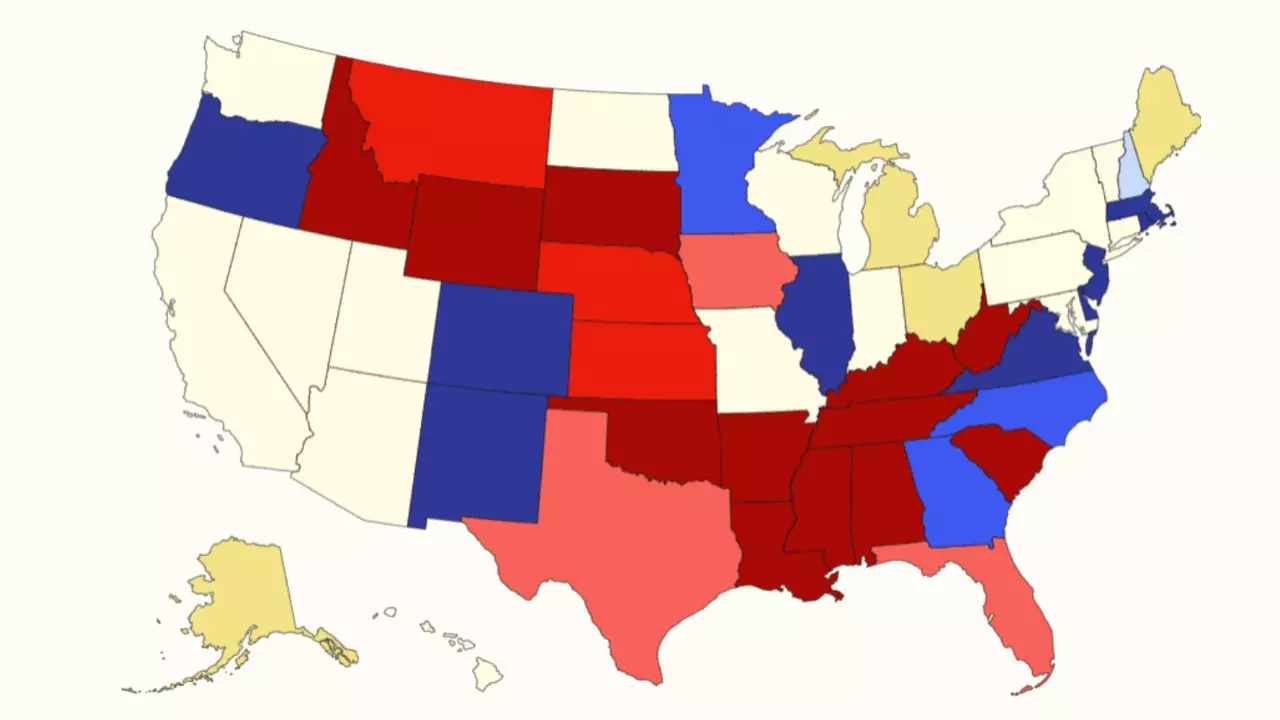
2026 senate control chances continue to favor Republicans as Alaska voters cast ballots in one of the most closely watched Senate races of the midterm cycle.
The Polymarket market on which party will control the Senate after the 2026 midterms currently gives Republicans a 56% chance of retaining the chamber, compared with 44% for Democrats.

That advantage remains relatively narrow as voting takes place Tuesday in Alaska, where Republican Sen. Dan Sullivan and Democratic former Rep. Mary Peltola headline a 16-candidate nonpartisan primary. Reuters reports that some recent polling has shown Peltola leading Sullivan, giving Democrats another reason to view Alaska as a legitimate opportunity in their attempt to gain Senate control.
Eligible new users can use Polymarket promo code WINNERS to claim a $20 trading bonus after making a qualifying $10 deposit. Terms and eligibility requirements apply.
Get Free $30 Credit for Premium Picks + Exclusive Discounts
Subscribe Now
GOP Senate Control Chances Remain at 56%
Republicans remain the prediction-market favorite to control the Senate after the November 3 midterm elections, but traders are not pricing the chamber as safely Republican.
Polymarket currently gives the Republican Party a 56% chance of controlling the Senate after the election.
Democrats sit at 44%.
The market has attracted roughly $4 million in trading volume across its Senate-control contracts.
That creates a significantly more competitive picture than the current Republican advantage in Washington might suggest.
Democrats need to gain at least four Senate seats from Republicans to win outright control of the chamber.
The party therefore needs several competitive races to break in its direction.
Alaska has increasingly become part of that conversation.
Alaska Senate Primary Is Underway
Alaska voters are casting ballots Tuesday in a nonpartisan primary that could offer an early indication of Democratic strength heading into November.
The top four candidates advance to the general election regardless of party.
That means Tuesday's primary is not a traditional Republican-versus-Democrat nomination contest.
Republican incumbent Dan S. Sullivan and Democrat Mary Peltola appear on the same ballot alongside 14 other candidates.
Both are widely expected to advance.
The more important question for the national Senate race is how they perform relative to one another.
A strong Peltola showing could reinforce the argument that Alaska has developed into a genuine Senate battleground.
A dominant Sullivan performance would give Republicans evidence that the state remains more securely in their column than recent polling suggests.
Polls in Alaska close at midnight ET, so the market does not yet have actual primary results to price.
Some Alaska Polls Show Peltola Leading Sullivan
The Alaska race has attracted national attention because recent polling has produced an unusual result for a state that generally favors Republicans in federal elections.
Reuters reported Tuesday that some opinion polls show Peltola leading Sullivan.
That does not make Peltola the favorite to win the seat.
It does make the race difficult to dismiss as an automatic Republican hold.
Peltola previously represented Alaska in the U.S. House after winning a 2022 special election.
She lost the seat to Republican Nick Begich in 2024 but retained significant statewide name recognition.
Her 2026 Senate campaign has also built a substantial fundraising operation.
The Associated Press reported that Peltola had raised approximately $18.5 million compared with $11.7 million for Sullivan heading into the primary.
That financial advantage gives Democrats the resources to contest Alaska aggressively through November if Tuesday's primary confirms that the race is competitive.
Two Dan Sullivans Add Another Variable in Alaska
The primary has also attracted national attention because the incumbent is not the only Dan Sullivan on the ballot.
Republican Sen. Dan S. Sullivan is seeking another term.
Daniel J. Sullivan Jr., a retired teacher from Petersburg, is also running.
The challenger is listed without a party affiliation on the ballot after surviving a legal challenge over his candidacy.
Republican officials accused Daniel J. Sullivan Jr. of entering the race to confuse voters and potentially damage the incumbent.
He denied those accusations.
President Donald Trump became involved in the controversy and endorsed the incumbent, specifically urging supporters to vote for "Sullivan, Dan S."
The unusual situation introduces another variable into Tuesday's results.
Even if the second Sullivan has little chance of winning the Senate seat, his vote share could provide additional information about dissatisfaction with the incumbent or confusion surrounding the ballot.
Why Alaska Matters for 2026 Senate Control
Democrats cannot win Senate control through national polling alone.
They need individual Republican-held seats to become competitive.
Alaska is valuable because it potentially expands the map.
If Democrats have to focus almost entirely on a small number of traditional battleground states, Republicans can concentrate resources on defending those races.
A competitive Alaska contest forces the GOP to spend money and campaign attention in another state.
That matters even if Republicans ultimately retain the seat.
Every additional competitive race creates another path for Democrats and another defensive obligation for Republicans.
Reuters described Alaska as one of Democrats' stronger opportunities to pick up a Republican-held seat.
Peltola's statewide experience makes the state especially interesting because she has already demonstrated an ability to attract voters outside the traditional Democratic base.
Alaska's Election System Could Help Peltola
Alaska uses an election system that differs from most states.
All candidates compete in one nonpartisan primary.
The top four finishers advance to the November election.
The general election then uses ranked-choice voting.
Voters rank candidates rather than selecting only one.
If no candidate receives a majority of first-choice votes, the lowest-performing candidate is eliminated and those votes are redistributed according to the voters' next choices.
The process continues until one candidate has a majority.
That system can matter in a race involving multiple Republicans.
Peltola benefited from ranked-choice voting when she won Alaska's 2022 special House election.
Republicans will want to avoid a similar scenario in the Senate race.
A strong Sullivan primary result could help consolidate conservative voters around the incumbent.
A weaker result could create more uncertainty about how Republican and independent voters rank candidates in November.
National Political Environment Gives Democrats an Opening
The Alaska race is developing during a difficult national political environment for Republicans.
President Trump's approval has fallen significantly during his second term.
Recent Economist/YouGov polling has put his overall approval in the mid-30s, with disapproval above 60%.
Other polling has also shown Democrats competitive or ahead on the congressional generic ballot.
Those national numbers do not translate directly into Senate seats.
Senate races are decided state by state, and the specific collection of seats being contested matters more than the nationwide popular vote.
They do provide important context.
Midterm elections frequently punish the president's party.
If dissatisfaction with Trump produces stronger Democratic turnout or weaker Republican participation, closely contested Senate races can move.
Alaska is one of the states where that national environment could matter.
Why Republicans Still Lead the Senate Market
Despite the difficult political environment, Republicans remain favored on Polymarket for several reasons.
The Senate map is structurally different from the House.
All 435 House seats are contested every two years.
Only roughly one-third of the Senate is up for election in a normal cycle.
That limits how much a national political wave can change the chamber at once.
Democrats also need multiple Republican-held seats to move in their direction.
Winning one unexpected race such as Alaska would help, but it would not be enough on its own.
Republicans can therefore lose some ground nationally and still maintain Senate control.
That structural advantage helps explain why Polymarket can simultaneously show signs of a favorable Democratic national environment while keeping Republicans at 56% to retain the Senate.
Alaska Could Change the Senate Map Without Deciding It
Tuesday's primary will not determine Senate control.
It could change how traders evaluate the path to control.
If Peltola performs strongly against Sullivan, Alaska becomes harder for national Republicans to ignore.
Campaign committees and outside groups could respond by increasing spending in the state.
Democrats could become more willing to invest resources there.
Prediction markets could also begin incorporating Alaska more heavily into the overall Senate-control calculation.
If Sullivan dominates the primary, the opposite could happen.
Traders may conclude that recent polling overstated Democratic strength.
Republicans could then devote more resources to races elsewhere.
That is why the margin matters even though both leading candidates are likely to advance.
Other Senate Battlegrounds Still Matter More
Alaska is only one part of the 2026 Senate map.
Control will likely depend on several competitive races across the country.
States including Georgia, Maine, Michigan, North Carolina and Texas have all attracted national attention during the cycle.
Candidate quality can significantly change the outlook in those states.
So can fundraising, presidential approval, economic conditions and turnout.
Prediction-market traders therefore have to evaluate several races at once rather than treating the national Senate election as a single contest.
A Democratic improvement in one state can be offset by Republican strength somewhere else.
That interconnected map is one reason the national Polymarket probability can remain relatively stable even while individual races move substantially.
Polymarket Traders See a Close Fight for Congress
The Senate market is part of a broader set of contracts tracking control of Congress.
Traders are currently much more confident that Democrats can make gains in the House than they are that Democrats will capture the Senate.
That distinction reflects the different electoral structures of the two chambers.
The House responds much more directly to national swings because every district is contested.
The Senate depends on the specific states holding elections in a particular cycle.
Polymarket's Senate-control market therefore provides a useful measure of how traders are combining national political conditions with the individual state map.
At 56%, Republicans have an advantage.
It is not a dominant one.
A probability in the mid-50s implies substantial uncertainty about which party will control the chamber after November.
How the Polymarket Senate Control Market Works
Polymarket's market asks which party will control the Senate following the November 3, 2026 elections.
Republican and Democratic outcomes trade separately.
Senate control is defined by the party that has more than half of voting Senate members, or half of the voting membership combined with control of the vice presidency.
If control remains ambiguous immediately after the election, the contract can remain open until the Senate selects a majority leader.
Contract prices correspond approximately with the market's implied probability.
A Republican contract trading around 56 cents therefore represents an approximately 56% chance of Republican control.
Prices can move continuously as traders buy and sell contracts.
That means the probability can react to primary results, polling, candidate developments, fundraising, endorsements and other political news.
The current 56% should be treated as a snapshot of market expectations rather than a forecast guaranteed to remain stable through Election Day.
How to Use Polymarket Promo Code WINNERS
Eligible new users can use Polymarket promo code WINNERS when creating an account.
The current Winners & Whiners offer provides a $20 trading bonus after an eligible new user makes a qualifying $10 deposit and satisfies the current promotional conditions.
- Create an eligible new Polymarket account.
- Enter promo code WINNERS during registration.
- Complete any required account verification.
- Make a qualifying deposit of at least $10.
- Complete the current promotional requirements.
- Receive the applicable $20 trading bonus.
Restrictions and eligibility requirements apply.
The current offer is not available in every jurisdiction.
Users should review the latest promotional terms before depositing or trading.
Prediction-market contracts involve financial risk, including the possibility of losing the amount used to purchase a losing contract.
2026 Senate Control Chances Outlook
Republicans remain the favorite to control the Senate, but Tuesday's Alaska vote highlights how narrow that advantage could become.
Polymarket currently gives the GOP a 56% chance of retaining the chamber.
Democrats remain within striking distance at 44%.
Alaska has become one of the races capable of moving that balance.
Peltola enters the primary with strong fundraising, statewide name recognition and polling that has given Democrats reason to believe the seat is competitive.
Sullivan remains the incumbent in a state with a Republican lean and has Trump's endorsement behind him.
Both are expected to advance from Tuesday's top-four primary.
The more important question is what the vote shares reveal about the November matchup.
A strong Peltola result would give Democrats another argument that the Senate majority is genuinely in play.
A decisive Sullivan performance could reinforce the Republican structural advantage reflected in the Polymarket market.
For now, traders continue to favor the GOP, but only modestly, as Alaska provides the latest live test of the 2026 Senate map.